Common Mistakes in Salesforce Implementations (and How to Avoid Them)

Introduction: The Promise and Pitfalls of Salesforce Salesforce dominates the CRM market because it does more than manage customer information—it orchestrates business transformation. From sales to service, marketing to analytics, the platform has become the digital backbone of ambitious organizations worldwide. Yet for every success story, there are tales of disillusionment: stalled rollouts, frustrated employees, ballooning budgets, and underwhelming returns. The irony is striking. A platform built to unify business operations often ends up sowing fragmentation when implemented carelessly. The gap between Salesforce’s potential and the reality of many failed implementations is not caused by the technology itself but by human missteps. Misaligned priorities. Short-term thinking. Neglect of fundamentals. The good news? These mistakes are not inevitable. They are patterns—predictable, repeated across industries and regions. Which means they are avoidable. The following guide examines the most common mistakes in Salesforce implementations and offers strategies to prevent them, so the platform becomes not a burden, but a competitive advantage. Table of Contents Introduction: The Promise and Pitfalls of Salesforce Rushing Through Discovery Without a Clear Vision Mistaking features for strategy Underestimating the Importance of Data Quality The dangers of “garbage in, garbage out” Failing to plan for data migration Elevating data quality to a strategic priority Ignoring Stakeholder Alignment Siloed decision-making Lack of executive sponsorship Over-Customization of the Platform When configuration turns into chaos Technical debt from unchecked development Neglecting User Adoption Treating training as an afterthought Resistance to change within teams Failing to Prioritize Change Management Communication gaps Mismanaging expectations Misjudging Integration Complexity Overlooking external systems Building fragile connections Inadequate Security and Compliance Planning Poor role hierarchy design Ignoring regulatory frameworks Skipping a Phased Rollout The “big bang” miscalculation Why incremental wins matter Not Accounting for Scalability Short-term fixes that collapse under growth Future-proofing with architecture discipline Overlooking Reporting and Analytics Setup Dashboards that don’t tell the truth Failing to measure ROI Poor Vendor or Partner Selection Choosing low-cost over capability Ignoring industry expertise Unrealistic Timelines and Budgets Scope creep as a silent assassin Failing to resource test cycles properly Neglecting Mobile-First Experience Disconnected field teams Missed opportunities for real-time visibility Weak Governance Structures No center of excellence Lack of standardized processes Failure to Leverage Automation Properly Over-automation leading to complexity Missing simple wins in workflow automation Not Preparing for Continuous Innovation Ignoring Salesforce releases Treating implementation as “one and done” Overlooking Support and Maintenance No plan for ongoing admin User feedback falling into a void Conclusion: From Avoidable Missteps to Sustainable Success YOU MIGHT ALSO LIKE Rushing Through Discovery Without a Clear Vision The absence of a defined business objective Every successful implementation begins with clarity. Organizations that embark on Salesforce projects without clearly defined objectives inevitably stumble. “Improve sales productivity” sounds attractive but lacks the specificity needed to shape configuration. Contrast that with “reduce average deal cycle length from 120 days to 90 days” or “automatically capture 95% of inbound leads within Salesforce.” These precise goals inform every design decision. Without this vision, the implementation drifts. Features are added piecemeal, processes are half-baked, and stakeholders lose faith. Salesforce should never be installed merely as a technological checkbox—it must solve measurable business problems. Mistaking features for strategy Salesforce dazzles with a vast catalog of features: lead scoring, CPQ tools, AI insights, mobile apps, and more. But features alone don’t constitute strategy. Too many organizations fall into “shiny object syndrome,” chasing every new release without considering whether it aligns with business outcomes. A dashboard, for instance, is not valuable because it exists. It is valuable because it empowers managers to make faster, better decisions. When organizations confuse tools for strategy, they wind up with clutter instead of clarity. Underestimating the Importance of Data Quality Salesforce thrives—or fails—on the strength of the data that fuels it. While most leaders focus heavily on flashy dashboards, automation workflows, or AI-driven insights, the quiet foundation of success lies in something far less glamorous: clean, reliable, and consistently managed data. Overlooking data quality is one of the most insidious mistakes in any Salesforce implementation because the consequences rarely show up on day one. Instead, they creep in slowly, eroding trust and undermining every process built on top of the platform. The dangers of “garbage in, garbage out” The phrase may be overused, but it remains brutally true: garbage in, garbage out. A Salesforce instance filled with duplicates, outdated contacts, missing fields, or inconsistent naming conventions quickly becomes an unreliable source of truth. Once users begin to doubt the accuracy of Salesforce data, the domino effect is swift. Sales teams stop trusting lead records, choosing to keep their own private lists on spreadsheets. Service agents question case histories and revert to emails to confirm customer interactions. Marketing teams second-guess segmentation reports, fearing they will target the wrong audience. What was intended as a central nervous system for the enterprise instead devolves into a patchwork of shadow systems and manual workarounds. The impact is not just operational but strategic. Forecasts become misleading, resulting in missed revenue targets. Account executives waste time chasing bad leads or outdated opportunities. Leadership makes decisions based on numbers that do not reflect reality. In customer-facing scenarios, the damage is even worse: sending communications to the wrong addresses, failing to recognize key accounts, or mismanaging renewals all erode trust with clients. In industries like healthcare, finance, or insurance, poor data quality can also carry regulatory and legal repercussions. The root issue is simple: Salesforce is designed to be the single source of truth. If that truth is distorted, every process, automation, and report built on top of it inherits the flaws. Failing to plan for data migration The problem often begins at the very start—during migration. Too many organizations assume moving data from legacy systems into Salesforce is a mechanical exercise. “Export the old records, import them into Salesforce, and move on.” This cavalier approach is a recipe for disaster. Data migration is not a technical task alone; it is a strategic exercise. It requires: Consider the consequences when organizations cut corners
The Complete Guide to Salesforce Consulting & Implementation Success
Discover how to achieve Salesforce consulting and implementation success. Explore strategies, common pitfalls, and CloudVandana’s proven expertise. Table of Contents Introduction: Why Salesforce Consulting Matters Today The Growing Complexity of Salesforce Ecosystem Evolution from CRM to Full Business Platform Why Businesses Struggle with DIY Implementations What Is Salesforce Consulting? Definition and Scope Roles of a Salesforce Consultant Key Benefits of Salesforce Consulting Services Understanding Salesforce Implementation What Implementation Really Means The Strategic vs. Technical Divide Phases of a Successful Salesforce Implementation 1. Discovery and Requirement Analysis 2. System Design and Architecture 3. Customization and Development 4. Integration with Existing Systems 5. Testing and Validation 6. Training and Change Management 7. Deployment and Ongoing Support Common Pitfalls in Salesforce Implementation 1. Over-Customization: Unnecessary Code Leads to High Maintenance 2. Lack of User Adoption: If Users Bypass Salesforce, Data Loses Accuracy 3. Ignoring Data Quality: Poor Migration Creates Bad Insights 4. Underestimating Change Management: Employees Resist Change Without Proper Guidance The Role of Data in Salesforce Success Importance of Data Migration Strategy Ensuring Data Integrity Data Governance for Long-Term Scalability Customization vs. Configuration: Finding the Balance When to Configure When to Customize Avoiding Technical Debt Integrations: Connecting Salesforce with the Enterprise APIs and Middleware Solutions Common Integration Scenarios User Adoption as the Cornerstone of Success Change Management in Salesforce Projects The Human Side of CRM Adoption Communication Frameworks That Work Selecting the Right Salesforce Consulting Partner Criteria to Evaluate Partners Importance of Industry Expertise Certifications and Proven Track Record Case Study: A Global Enterprise Transformation with Salesforce Insights from Salesforce Experts Measuring Salesforce Implementation Success Ongoing Support and Managed Services Why Post-Implementation Support Matters Continuous Optimization Future Trends in Salesforce Consulting Best Practices for Salesforce Consulting & Implementation Conclusion: Turning Salesforce into a Strategic Growth Engine Frequently Asked Questions (FAQs) 1. What is Salesforce consulting, and why do businesses need it? 2. How long does a typical Salesforce implementation take? 3. What are the costs associated with Salesforce consulting? 4. How do I choose the right Salesforce consulting partner? 5. What are the most common mistakes in Salesforce implementation? 6. How can we ensure high user adoption of Salesforce? 7. What role does data quality play in Salesforce success? 8. Should we configure or customize Salesforce? 9. How does Salesforce integrate with other business systems? 10. What ongoing support is needed after Salesforce go-live? 11. What KPIs should we track to measure Salesforce success? 12. Why choose CloudVandana as a Salesforce consulting partner? YOU MIGHT ALSO LIKE Introduction: Why Salesforce Consulting Matters Today In today’s hyper-competitive environment, customer experience is the ultimate differentiator. Salesforce has emerged as the most powerful platform to deliver this experience—providing companies with a unified system to manage sales, service, marketing, commerce, analytics, and more. Yet, despite its dominance, many organizations struggle to achieve true success with Salesforce. Why? Because Salesforce is not just an out-of-the-box tool. It’s a digital transformation platform that requires vision, planning, and deep technical expertise. Without these, businesses risk underutilizing it, leading to wasted investment and frustrated teams. This is where Salesforce consulting becomes indispensable. A skilled consulting partner acts as both guide and architect—helping organizations design, implement, and scale Salesforce in a way that aligns with business strategy. As Marc Benioff, Salesforce’s co-founder and CEO, has often said: “Speed is the new currency of business.” Salesforce consulting ensures organizations don’t just adopt Salesforce, but do so quickly, intelligently, and sustainably. The Growing Complexity of Salesforce Ecosystem Evolution from CRM to Full Business Platform Salesforce began in 1999 as a simple CRM delivered over the cloud—a radical departure from on-premise software at the time. Over two decades, it has evolved into a vast ecosystem that touches every corner of an enterprise. Today, Salesforce includes: This expansion means Salesforce is no longer a “tool” but a business operating system. The breadth of its capabilities is what makes it so powerful—and so complex to implement. Why Businesses Struggle with DIY Implementations Many organizations attempt to implement Salesforce internally, assuming it’s simply a matter of licensing and setup. But Salesforce is more like an empty canvas—it provides building blocks, not finished art. Missteps often include: Without expert guidance, Salesforce projects often end up over budget, behind schedule, or underutilized. Consulting partners prevent these outcomes. What Is Salesforce Consulting? Definition and Scope Salesforce consulting is a specialized service that helps businesses maximize Salesforce’s potential by aligning the platform with organizational strategy, processes, and goals. It includes planning, implementation, customization, integration, training, and ongoing optimization. In essence, Salesforce consulting turns technology into a growth enabler. Roles of a Salesforce Consultant A Salesforce consultant wears many hats: The consultant’s value lies in combining technical depth with business acumen. Key Benefits of Salesforce Consulting Services Understanding Salesforce Implementation What Implementation Really Means Salesforce implementation is not merely “installing software.” It involves transforming how a business engages with its customers, employees, and partners. It requires aligning processes with technology, cleaning and migrating data, and embedding Salesforce into daily workflows. The Strategic vs. Technical Divide Some organizations see implementation as purely technical—setting up workflows, fields, and dashboards. But without strategic alignment, the implementation lacks impact. True success is found where business strategy meets technical execution. Phases of a Successful Salesforce Implementation A Salesforce implementation is a journey that transforms how an organization operates. It’s not just about deploying software; it’s about aligning people, processes, and technology to deliver lasting business value. A successful implementation typically follows a structured sequence of phases, each building upon the last to ensure a smooth rollout and strong adoption. 1. Discovery and Requirement Analysis Every successful Salesforce project begins with discovery. In this phase, consultants work closely with stakeholders to understand business objectives, challenges, and existing workflows. The outcome of this phase is a clear requirements document—a blueprint that defines the “must-haves” and “nice-to-haves” for the project. 2. System Design and Architecture Once requirements are defined, architects translate them into a scalable design. This is where business goals meet technical execution. This phase ensures the system
7 Versions of the Same File? Let’s Clean That Up.

Is Your Salesforce Full of Duplicates? Duplicate files don’t just take up space—they slow down your team, confuse your workflows, and make audits painful. Here are 3 simple steps you can take today to clean up version chaos: If you want a shortcut to all three, CV Files connects Salesforce with Drive or OneDrive—so you can manage files from the cloud, not your inbox. For those who prefer convenience over cleanup, this might be worth a look.esting upfront. 👉 See CV Files on AppExchange Schedule A Call With Us Request a Free Consultation YOU MIGHT ALSO LIKE
Salesforce Agentforce: From Reactive to Proactive Solutions
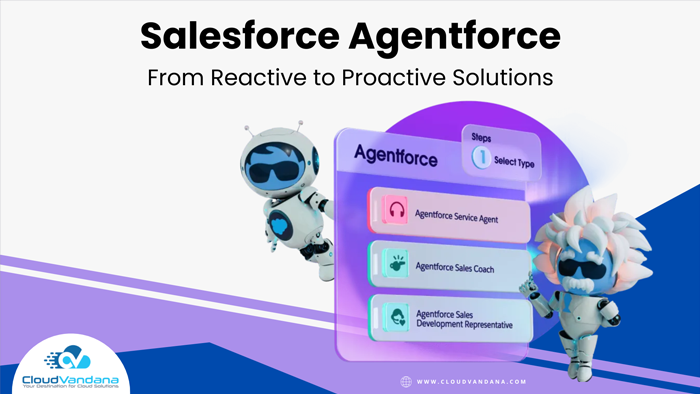
Learn how Salesforce Agentforce uses AI to redefine customer service. From predicting customer needs to providing seamless experiences, Agentforce moves beyond traditional chatbots to deliver proactive, personalized support. In today’s fast-paced world, what customers want keeps changing. According to Salesforce’s State of the Connected Customer report, 61% of customers prefer self-service options, but 68% would avoid chatbots after a poor experience. This reveals a critical gap in customer support—people want quick solutions but expect quality. Addressing this, Salesforce introduced Agentforce, an advanced AI-driven solution that transforms customer interactions by predicting needs and providing exceptional support. Table of Contents Moving from Reactive to Proactive Support with Salesforce Agentforce What Makes Agentforce Different from Regular Chatbots? Predictive AI: A Game-Changer in Customer Service How Agentforce Enables Personalized Customer Interactions Building Trust with the Einstein Trust Layer Empowering Support Teams with Real-Time Insights A Versatile AI Solution for Every Business Need The Power of Omni-Channel Support Bridging the AI Gap for Future Growth How Agentforce Sets Up for Exponential Business Growth Conclusion: The Future of Customer Service is Here Moving from Reactive to Proactive Support with Salesforce Agentforce Traditional customer service has been reactive, with agents responding to issues as they arise. However, Agentforce changes the game by making customer service proactive. With AI, businesses can foresee customer needs, address issues before they escalate, and even spot opportunities to suggest useful products. Using real-time data and insights from customer history, the platform identifies patterns to predict potential problems. For example, if a customer frequently faces a technical issue, Agentforce will identify it and offer solutions before the customer has to contact Agentforce. What Makes Agentforce Different from Regular Chatbots? Most traditional chatbots rely on preset responses, which limits their ability to handle complex or unique queries. They can answer basic questions but often require human assistance for anything more involved. Agentforce, on the other hand, is more advanced and operates almost like a live agent with deep understanding and independent decision-making. This AI-driven solution can manage text, voice, and video interactions. Its versatility allows it to provide support through multiple channels, ensuring seamless assistance no matter how a customer contacts it. Predictive AI: A Game-Changer in Customer Service At the core of this, the strength is its predictive AI capability. This allows it to analyze past customer interactions, recognize trends, and anticipate future needs. Imagine if a customer often calls about billing questions. With powerful insights, the system can prompt helpful information about billing or offer solutions before the customer asks. By integrating with Data Cloud, the solution can draw on a vast amount of data to enhance its predictions, helping businesses understand customer preferences and build stronger relationships. How Agentforce Enables Personalized Customer Interactions Beyond essential support, the solution delivers genuinely personalized experiences. Using customer data securely through the Einstein Trust Layer, Agentforce can respond with customized messages and actions. For instance, if a customer shows interest in specific products, the solution can make relevant suggestions. This tailored approach resolves issues faster and helps businesses create memorable experiences that foster customer loyalty. Building Trust with the Einstein Trust Layer Data privacy is a top concern for any company using AI. Einstein Trust Layer ensures customer data is handled securely and ethically. The Trust Layer protects sensitive information, allowing businesses to rely on AI for customer interactions without sacrificing security or compliance. This commitment to trust builds confidence in both companies and customers. Empowering Support Teams with Real-Time Insights This solution isn’t just a tool for customer interactions—it also supports the teams behind the scenes. With Salesforce Customer Experience Intelligence, supervisors can access live insights on ongoing conversations, customer sentiment, and performance metrics. This allows teams to take immediate action, providing instructions to AI agents or proactively contacting customers. A Versatile AI Solution for Every Business Need This platform can be integrated across different aspects of a business, handling routine inquiries and complex escalations alike. At the 2024 Dreamforce event, Salesforce demonstrated how businesses could customize the platform to handle a variety of customer interactions, from answering simple FAQs to resolving complex service requests. Its ability to scale across industries makes it a valuable tool for companies looking to streamline operations and improve customer service. The Power of Omni-Channel Support Unlike typical chatbots limited to text, Agentforce supports omnichannel communication, handling voice, video, and text interactions. Customers can reach out through their preferred channels and still receive quick, consistent, and accurate responses. Omni-channel support has improved customer satisfaction, providing flexibility and responsiveness that customers appreciate. By adapting to various communication channels, the solution ensures businesses meet customer needs wherever they are. Bridging the AI Gap for Future Growth Many companies are just beginning to incorporate AI into customer service, and the journey can be challenging. Many businesses using AI in customer support have only seen slight productivity gains. However, Agentforce offers a pathway to more substantial improvements thanks to its autonomous AI capabilities. Unlike earlier chatbots, which often required human oversight, the solution is designed to operate independently within customized workflows. This autonomy allows it to analyze relevant data, develop solutions, and execute actions without constant intervention, freeing human agents to focus on more critical tasks. How Agentforce Sets Up for Exponential Business Growth The solution offers exponential growth pathways for businesses seeking to improve customer service by embedding AI at every customer touchpoint. This enhances efficiency and helps companies to scale their operations and reach more customers without compromising service quality. With this solution, companies can create personalized, seamless, and increasingly efficient customer interactions, improving customer loyalty and long-term growth. Conclusion: The Future of Customer Service is Here Agentforce represents a leap forward in customer service, going beyond essential support to deliver proactive, personalized experiences. By predicting customer needs, offering omnichannel support, and empowering teams with real-time data, the solution enables businesses to meet and exceed customer expectations. As the adoption of AI continues to grow, this AI-driven solution is well-positioned to lead enterprises toward a future where customer interactions are
The Power of ServiceNow ITSM
Transform your IT operations with the ServiceNow ITSM platform. Partner with CloudVandana for expert ServiceNow consulting, custom implementation, and ongoing support. Optimize your IT resources today! CloudVandana, a leading ServiceNow consulting company in India, specializes in helping businesses implement and optimize ITSM solutions using ServiceNow to streamline operations and deliver unmatched service experiences. This blog explores how ServiceNow’s ITSM platform can transform your IT operations and why partnering with a trusted consulting firm like CloudVandana is crucial for maximizing its potential. Table of Contents What is ITSM in ServiceNow? Key Features of ServiceNow ITSM 1. Incident Management 2. Change Management 3. Problem Management 4. Asset and Configuration Management 5. Service Request Management The Benefits of ServiceNow ITSM 1. Improved Efficiency 2. Enhanced Visibility 3. Scalability 4. Customer Satisfaction 5. Cost Savings Why Partner with CloudVandana for ServiceNow ITSM? Real-World Success: CloudVandana’s Proven Track Record Conclusion: Transform Your IT Operations with ServiceNow ITSM YOU MIGHT ALSO LIKE What is ITSM in ServiceNow? IT Service Management (ITSM) refers to the strategic approach businesses take to designing, delivering, managing, and improving the way IT services are used. ServiceNow’s ITSM suite offers a comprehensive platform to automate and manage IT services, streamlining processes across the entire IT infrastructure. ServiceNow ITSM enables organizations to: Key Features of ServiceNow ITSM ServiceNow ITSM has several powerful features that make it an industry leader in service management solutions. These features enable organizations to efficiently manage service requests, incidents, changes, problems, and assets: 1. Incident Management ServiceNow’s incident management module enables IT teams to respond to and resolve issues quickly, minimizing the impact on business operations. The system tracks incidents from identification to resolution, ensuring accountability and continuous improvement. 2. Change Management Change is inevitable, but a proper system can lead to service disruptions. ServiceNow’s change management module ensures that all IT changes are planned, evaluated, and implemented efficiently. It reduces risks, ensures compliance, and promotes seamless transitions. 3. Problem Management This feature helps IT teams proactively identify root causes of recurring incidents and prevent them from happening again. By analyzing incident patterns and applying corrective actions, problem management ensures long-term improvements in IT performance. 4. Asset and Configuration Management ServiceNow’s configuration management database (CMDB) provides a single source of truth for IT assets. It helps organizations maintain an accurate and up-to-date record of hardware, software, and infrastructure components, improving decision-making and reducing operational costs. 5. Service Request Management ServiceNow automates service request fulfillment, empowering employees to submit, track, and resolve requests through a self-service portal. This enhances user experience while freeing up IT resources to focus on more strategic tasks. The Benefits of ServiceNow ITSM ServiceNow’s ITSM platform offers numerous benefits that can significantly enhance your IT operations: 1. Improved Efficiency By automating repetitive tasks and standardizing processes, ServiceNow ITSM helps IT teams work more efficiently. It reduces manual interventions, minimizes errors, and ensures faster service requests and incident response times. 2. Enhanced Visibility ServiceNow’s comprehensive dashboard provides a 360-degree view of IT operations, giving organizations real-time insights into performance metrics, service availability, and incident status. This visibility enables proactive management and swift decision-making. 3. Scalability As businesses grow, their IT needs evolve. ServiceNow’s cloud-based ITSM platform is designed to scale with your organization, accommodating changing demands without costly infrastructure upgrades. 4. Customer Satisfaction ServiceNow ITSM improves customer satisfaction by providing quicker and more reliable service. Automated workflows address service requests and incidents promptly, reducing downtime and enhancing the end-user experience. 5. Cost Savings By optimizing resource allocation, automating manual processes, and reducing service disruptions, ServiceNow ITSM delivers tangible cost savings. These efficiencies translate into better financial performance and a more agile IT organization. Why Partner with CloudVandana for ServiceNow ITSM? While ServiceNow is a powerful ITSM platform, realizing its full functionalities requires expert implementation and customization. That’s where CloudVandana comes in. As a trusted ServiceNow consulting partner, CloudVandana offers a range of ITSM services, including: Real-World Success: CloudVandana’s Proven Track Record CloudVandana has helped numerous organizations in India and around the globe unlock the power of ServiceNow ITSM. Our clients have seen remarkable improvements in operational efficiency, service quality, and customer satisfaction. We deliver results that truly matter by leveraging our deep expertise in ServiceNow consulting. Conclusion: Transform Your IT Operations with ServiceNow ITSM In today’s digital age, efficient IT service management is the backbone of every successful business. ServiceNow’s ITSM platform empowers organizations to manage IT services more effectively, reducing downtime, optimizing resources, and enhancing service delivery. Partnering with an experienced consulting firm like CloudVandana ensures you maximize the benefits of ServiceNow ITSM while aligning it with your unique business objectives. Looking to streamline your IT operations? Contact CloudVandana today to explore how we can help you implement a robust ITSM solution with ServiceNow that drives real business results. Schedule A Call With Us Request a Free Consultation YOU MIGHT ALSO LIKE
What is a Front-End Developer? A Complete Guide to Their Role, Skills, and Impact

In today’s digital-first world, a front-end developer is crucial in crafting visual and interactive elements of websites and web applications. This guide will delve into the role of a front-end developer, the skills they bring to the table, and the importance of their work in creating user-friendly digital experiences. Table of Contents What is a Front-End Developer? Key Responsibilities of a Front End Developer Essential Skills for a Front-End Developer 1. HTML (Hypertext Markup Language) 2. CSS (Cascading Style Sheets) 3. JavaScript 4. Responsive Design 5. Version Control/Git 6. Web Performance Optimization 7. Testing and Debugging 8. Soft Skills Front-End Development Frameworks and Libraries The Importance of Front-End Development 1. First Impressions Matter 2. Improved User Experience 3. Search Engine Optimization (SEO) 4. Brand Consistency How to Become a Front-End Developer Frequently Asked Questions Conclusion YOU MIGHT ALSO LIKE What is a Front-End Developer? A front-end developer is a professional responsible for designing and implementing a website or web application’s user interface (UI). Unlike back-end developers who work on server-side code, front-end developers focus on the client side, which includes everything that users see and interact with directly. They build intuitive, visually appealing, responsive layouts that ensure a seamless experience across various devices and browsers. Front-end developers bridge the gap between design and technology, bringing static mockups to life with interactive elements, animations, and smooth transitions. Using a mix of programming languages, frameworks, and design principles ensures that websites are functional, aesthetically pleasing, and easy to use. Key Responsibilities of a Front End Developer A front-end developer’s role is diverse and varies depending on the project. However, some of the core responsibilities include: Essential Skills for a Front-End Developer Front-end developers require unique technical skills and a keen eye for design. Here are the fundamental skills every front-end developer should master: 1. HTML (Hypertext Markup Language) HTML is the backbone of any website, providing the structure and content. Front-end developers use HTML to create headings, paragraphs, lists, links, and other elements that make up a webpage’s content. 2. CSS (Cascading Style Sheets) CSS is responsible for styling the HTML structure. It allows front-end developers to define colors, fonts, spacing, and layout. CSS frameworks like Bootstrap, Tailwind CSS, and Bulma streamline this process and make it easier to create responsive designs. 3. JavaScript JavaScript brings interactivity to websites. Front-end developers use JavaScript to create dynamic content, handle user inputs, and manage events. Modern JavaScript libraries and frameworks, such as React, Angular, and Vue.js, have become essential for developing complex, interactive user interfaces. 4. Responsive Design With the increasing use of mobile devices, front-end developers must understand responsive design principles. Using media queries and flexible grid systems ensures websites adapt seamlessly to various screen sizes. 5. Version Control/Git Version control systems like Git are essential for tracking changes, collaborating with other developers, and managing project files. Platforms like GitHub, GitLab, and Bitbucket allow front-end developers to work collaboratively on large-scale projects. 6. Web Performance Optimization Techniques like lazy loading, code minification, and image compression are essential for ensuring fast-loading websites. Front-end developers must be familiar with these optimization methods to enhance user experience and improve search engine rankings. 7. Testing and Debugging Testing and debugging skills are crucial for ensuring that websites function correctly. Front-end developers use tools like Chrome DevTools for in-browser testing and automated testing frameworks like Jest, Mocha, and Cypress for unit and integration testing. 8. Soft Skills Front-end developers should have strong communication and collaboration skills, as they often work with designers, back-end developers, and project managers. This role’s key soft skills are attention to detail, problem-solving, and adaptability. Front-End Development Frameworks and Libraries Front-end developers rely on various frameworks and libraries to streamline development and improve efficiency. Here are some popular ones: The Importance of Front-End Development Front-end development plays a critical role in the success of digital platforms. Here’s why: 1. First Impressions Matter Users form their first impression of a website within seconds. A well-designed and visually appealing interface can attract and retain users, while a poorly designed one can drive them away. 2. Improved User Experience Front-end developers ensure websites are easy to navigate, visually engaging, and responsive. A positive user experience translates to higher user satisfaction and increased conversion rates. 3. Search Engine Optimization (SEO) Front-end development directly impacts SEO through page speed, mobile-friendliness, and accessibility. Optimized websites rank better on search engines, leading to increased visibility and traffic. 4. Brand Consistency Consistent design elements, such as colors, fonts, and logos, reinforce brand identity. Front-end developers help maintain this consistency across all web pages, contributing to brand recognition and trust. How to Become a Front-End Developer Becoming a front-end developer involves a combination of formal education, self-study, and practical experience. Here are some steps to get started: Frequently Asked Questions 1 What does this role actually involve?This position is responsible for building the visible parts of websites and applications that users interact with directly—such as layouts, buttons, navigation, and forms. The work involves using HTML, CSS, and JavaScript to create responsive, accessible, and user-friendly experiences across browsers and devices. 2. What are the essential skills required?Key competencies include proficiency in HTML5, CSS3, JavaScript, and modern frameworks like React, Angular, or Vue.js. A solid understanding of responsive design, cross-browser compatibility, version control systems like Git, and web accessibility standards is also critical. 3. How does this role influence business outcomes?This function shapes how users experience a brand online. It directly impacts user engagement, website performance, conversion rates, and customer satisfaction. A fast, intuitive, and visually polished interface can play a pivotal role in driving business growth. Conclusion Front-end developers are pivotal in crafting engaging and user-friendly digital experiences, making them essential for businesses aiming to build a solid online presence. Finding the right developers can be challenging as the demand for skilled front-end talent grows. That’s where a Staff Augmentation partner like CloudVandana can make a difference. By providing access to highly skilled front-end developers, we help you scale your team efficiently and
10 Advantages of Staff Augmentation for Software Development Projects

Discover the advantages of staff augmentation for software development projects. Learn how accessing a global talent pool, reducing costs, and enhancing flexibility can accelerate your time-to-market and improve project outcomes with the expert solutions of CloudVandana. In this blog, we’ll explore the key advantages of staff augmentation for software development projects and why it may be the ideal solution for your organization. Table of Contents 1. Access to a Global Talent Pool 2. Cost-Effectiveness 3. Flexibility and Scalability 4. Faster Time-to-Market 5. Focused Expertise 6. Reduced Risk 7. Improved Focus on Core Business Activities 8. Enhanced Team Collaboration 9. Greater Control Over Project Management 10. Long-Term Partnerships Conclusion YOU MIGHT ALSO LIKE 1. Access to a Global Talent Pool One of the most significant advantages of staff augmentation is access to a diverse and skilled talent pool. With the global nature of the tech industry, businesses can tap into expertise from around the world. This is particularly beneficial for specialized roles that may be challenging to fill locally, such as cloud architects, AI specialists, or cybersecurity experts. By leveraging staff-augmentation, companies can find the right talent that fits their project requirements without being restricted by geographical limitations. 2. Cost-Effectiveness Staff augmentation can be a cost-effective solution compared to traditional hiring methods. Recruiting full-time employees involves various expenses, including salaries, benefits, training, and onboarding costs. In contrast, augmenting your staff allows you to hire professionals temporarily, which can lead to substantial savings. You can choose the duration of the engagement based on project needs, ensuring you only pay for the talent you require, thereby optimizing your budget. 3. Flexibility and Scalability In the dynamic field of software development, project requirements can change rapidly. Staff augmentation offers the flexibility to scale your team up or down according to project demands. You can quickly add skilled developers to your team if you need to accelerate development during peak periods. Conversely, when the workload decreases, you can reduce your team size without the complications associated with layoffs or permanent hires. This adaptability enables companies to remain agile and responsive to market changes. 4. Faster Time-to-Market In a competitive environment, time-to-market is crucial. By utilizing staff augmentation, businesses can significantly speed up their development processes. Augmented teams can immediately integrate into existing projects, reducing the ramp-up time often associated with new hires. With experienced professionals on board, you can quickly overcome technical challenges and streamline workflows, ultimately leading to faster project completion and quicker delivery of products to your customers. 5. Focused Expertise Staff augmentation allows companies to hire professionals with specific skills tailored to their project needs. For example, if you’re working on a mobile application, you can hire developers with expertise in iOS or Android development. This targeted approach ensures that you have the right skills on your team, improving the quality of the final product. Additionally, augmented staff often bring fresh perspectives and innovative solutions, enhancing the overall development process. 6. Reduced Risk When it comes to software development, project risks can arise from various factors, including technology changes, shifting client requirements, and resource shortages. Staff augmentation mitigates some of these risks by providing immediate access to skilled personnel who can adapt to changing circumstances. Moreover, by supplementing your existing team, you reduce the likelihood of project delays and ensure that your development efforts remain on track. 7. Improved Focus on Core Business Activities Outsourcing certain aspects of software development through staff augmentation enables organizations to focus on their core business activities. Instead of dedicating time and resources to recruitment, training, and management of additional staff, companies can concentrate on strategic initiatives, customer relations, and business growth. This streamlined focus enhances overall operational efficiency and drives business success. 8. Enhanced Team Collaboration Integrating augmented staff into your existing team can foster enhanced collaboration and knowledge sharing. When skilled professionals join your team, they bring their unique insights and expertise, which can enrich the overall team dynamic. This collaborative environment encourages innovation and promotes best practices, ultimately leading to higher-quality software development. 9. Greater Control Over Project Management Staff augmentation allows organizations to control their projects while benefiting from external expertise. You can choose how to manage augmented staff, ensuring they align with your organizational goals and project timelines. This level of oversight enables you to maintain quality standards and project consistency while leveraging specialized talent’s benefits. 10. Long-Term Partnerships Engaging in staff augmentation can lead to long-term partnerships with skilled professionals and specialized firms. These relationships can be advantageous for future projects, as you’ll have established connections with talented individuals who are already familiar with your company’s culture and processes. Building these partnerships can streamline future hiring and collaboration efforts, ultimately benefiting your organization in the long run. Conclusion Staff augmentation has emerged as a vital strategy for companies seeking to enhance their software development capabilities. Organizations can achieve their development goals more efficiently with access to a global talent pool, cost-effectiveness, flexibility, and reduced risk. By leveraging the expertise of augmented staff, businesses can accelerate their time-to-market, improve project quality, and focus on core activities. As you consider the future of your software development projects, exploring the benefits of staff augmentation is essential. Whether you’re a startup looking to scale or an established organization aiming to innovate, staff augmentation can provide the support you need to thrive in today’s competitive world. Embrace this approach and unlock the full potential of your software development endeavors. By partnering with a trusted staff augmentation provider in India like CloudVandana, you can ensure that your projects are staffed with the right talent. This will enable your business to achieve its strategic objectives and maintain a competitive edge in the market. Schedule a call with us and take your business to the next level. Schedule A Call With Us Request a Free Consultation YOU MIGHT ALSO LIKE
Hire Certified Salesforce Developers: Drive Success with Expert Talent

Salesforce is a compelling platform, but you need skilled professionals to fully leverage its potential to tailor the system to meet your business requirements. Hiring certified Salesforce developers ensures that you’re working with experts who deeply understand the platform’s tools, technologies, and best practices. Table of Contents Why Hire Certified Salesforce Developers? How to Hire Certified Salesforce Developers Partner with CloudVandana to Hire Certified Salesforce Developers Benefits of Hiring from CloudVandana: Conclusion YOU MIGHT ALSO LIKE Why Hire Certified Salesforce Developers? How to Hire Certified Salesforce Developers Finding the right certified Salesforce developers is essential to your project’s success. Here are some steps to guide you: Partner with CloudVandana to Hire Certified Salesforce Developers At CloudVandana, we specialize in providing businesses with access to a vast pool of certified Salesforce developers who are ready to deliver customized solutions tailored to your unique needs. Our talent pool is comprised of highly skilled professionals, each with multiple certifications and extensive experience across various industries. Benefits of Hiring from CloudVandana: Conclusion Hiring certified Salesforce developers is the key to unlocking the full potential of your Salesforce platform. These experts bring the technical proficiency, certifications, and experience needed to customize, optimize, and secure your Salesforce environment. CloudVandana offers an efficient and reliable way to hire certified Salesforce developers, ensuring your projects are successful and your business thrives. Looking to hire certified Salesforce developers? Partner with CloudVandana and get started today! Schedule A Call With Us Request a Free Consultation YOU MIGHT ALSO LIKE
Dreamforce 2024: A New Era of Innovation and Growth

Introduction: A Global Tech Celebration Dreamforce 2024 marked a pivotal moment for the Salesforce ecosystem, gathering over 45,000 attendees from 140+ countries. This year’s event was packed with innovative advancements, insightful sessions, and networking opportunities, setting the stage for significant technological transformations. CloudVandana, a leading Salesforce consulting firm, is excited to highlight key takeaways and future trends from this groundbreaking event. Table of Contents Introduction: A Global Tech Celebration Revolutionary Announcements at Dreamforce 2024 How AI is Shaping Business Success Unmatched Networking Opportunities at Dreamforce The Sustainability Commitment Of Dreamforce Customer Success Stories at Dreamforce’24 Popular Breakout Sessions at Dreamforce’24 Staying Informed About Future Events Partnering with CloudVandana: Your Trusted Salesforce Consulting Conclusion: The Future Awaits YOU MIGHT ALSO LIKE Revolutionary Announcements at Dreamforce 2024 How AI is Shaping Business Success Unmatched Networking Opportunities at Dreamforce In addition to technological innovations, Dreamforce provided numerous opportunities for attendees to connect, learn, and grow: The Sustainability Commitment Of Dreamforce Dreamforce’24 maintained Salesforce’s dedication to sustainability with a series of eco-friendly initiatives: Customer Success Stories at Dreamforce’24 Several success stories highlighted how businesses are leveraging Salesforce technology to achieve remarkable outcomes: Popular Breakout Sessions at Dreamforce’24 Some of the most highly attended sessions focused on proper optimization and development: Staying Informed About Future Events For those eager to stay updated on upcoming Salesforce events: Partnering with CloudVandana: Your Trusted Salesforce Consulting As a top consulting partner, CloudVandana is committed to helping businesses harness the power of Salesforce’s innovative technologies. Whether it’s implementing the latest AI solutions like Agentforce or optimizing your current CRM system, our expert team is here to guide you on your digital transformation journey. Conclusion: The Future Awaits Dreamforce ’24 highlighted how Salesforce’s new tools, especially in AI and automation, can help businesses grow and improve. By using these innovations, companies can work smarter, scale faster, and keep their customers happy. CloudVandana is here to help you make the most of these powerful tools and support your journey to success. Contact us today to find out how we can assist you! Schedule A Call With Us Request a Free Consultation YOU MIGHT ALSO LIKE
CV Files: The Ultimate Solution for Google Drive and OneDrive Integration and File Management

Managing files across platforms can be challenging, especially for businesses that rely heavily on cloud storage. Organizations often face hurdles like fragmented data, inefficient collaboration, and costly storage fees. Enter CV Files, a robust Google Drive and OneDrive integration and file management solution designed to simplify your workflow by seamlessly bringing these two platforms into a single app.This blog will explore how CV Files can transform your file management process, saving you time and reducing costs. Table of Contents Simplified Integration: Google Drive and OneDrive Integration in One App Cost-Effective File Management Collaborative Features for Team Efficiency Secure and Controlled Access Seamless Automation No Minimum License Requirements & Flexible Payment Plans Conclusion YOU MIGHT ALSO LIKE Simplified Integration: Google Drive and OneDrive Integration in One App CV Files merges Google Drive and OneDrive into a single, user-friendly application. This integration allows businesses to effortlessly upload and manage files from Salesforce to either platform. Gone are the days of jumping between multiple platforms—CV Files offers a unified solution for your cloud storage needs. With this tool, you can eliminate data silos and create a single source of truth for your business-critical files. Cost-Effective File Management One of the standout features of CV Files is the ability to save on Salesforce file storage costs. Salesforce storage is notoriously expensive, and as organizations grow, so does the need for more space. With CV Files, you can offload your files to Google Drive or OneDrive, significantly reducing storage expenses. Businesses can maintain their essential files without worrying about the mounting costs of keeping them within Salesforce. Collaborative Features for Team Efficiency CV Files doesn’t just stop at file storage—it’s built for collaboration. The tool integrates My Drive and Shared Drive, allowing multiple team members to access and collaborate on files easily. This is particularly useful for businesses that require real-time teamwork, as CV Files enables file sharing across teams in a secure and organized manner. In addition, CV Files supports multi-user login, which allows teams to work simultaneously without disrupting the workflow. Whether your team is working from the same location or across different time zones, everyone can instantly access the files they need. Secure and Controlled Access Security is paramount in today’s digital landscape, and CV Files has built-in features to help you maintain control over your data. The solution allows you to restrict user login to your company domain, ensuring only authorized users can access your files. This adds an extra layer of security, especially for organizations handling sensitive data. Beyond domain restrictions, you can also set default access levels for each user—whether as an Editor, Commenter, or Viewer—giving you the flexibility to manage permissions according to each team member’s role. This feature makes it easy to ensure that files are handled appropriately, with the right level of oversight for each user. Seamless Automation CV Files’ key advantage is its ability to automatically upload files from Salesforce to either Google Drive or OneDrive, based on your preference. This automation saves time and ensures files are correctly organized without manual intervention. Whether you store files in Google Drive or OneDrive, CV Files ensures a smooth transition between Salesforce and your chosen platform. No Minimum License Requirements & Flexible Payment Plans CV Files is designed to be accessible to businesses of all sizes. There are no minimum license requirements, so whether you’re a small startup or a large enterprise, you can use the tool without worrying about upfront commitments. Additionally, CV Files offers flexible monthly or annual payment plans, making it a cost-effective solution for businesses with varying needs. Conclusion An integrated, efficient, and secure file management solution is essential in a world where businesses rely on cloud storage. CV Files offers a seamless way to manage files between Salesforce, Google Drive, and OneDrive while saving on costs and improving team collaboration. With its automated upload feature, secure access controls, and flexible pricing, CV Files is a game-changer for organizations looking to streamline their workflow and enhance productivity. Take control of your file management process with CV Files and experience a new level of efficiency and security! Schedule A Call With Us Request a Free Consultation YOU MIGHT ALSO LIKE